e-mail page
print pageHolocaust Restitution in Poland
Polish Prime Minister Donald Tusk Commits to Restitution Legislation
Remarks of Ambassador Victor Ashe, United States Ambassador to Poland
Claims Conference Meets With Polish Prime Minister Jaroslaw Kaczynski
In 2007, the Claims Conference continued to provide technical assistance to the World Jewish Restitution Organization(WJRO), which is charged with securing compensation and restitution from other countries of Central and Eastern Europe. Working together with local Jewish communities, the WJRO and the Claims Conference have been pressing governments to provide for the recovery of, or compensation for,property looted by the Nazis and their collaborators during the Holocaust and later nationalized by Communist regimes.
In the past year, among its other restitution-related activities, the Claims Conference and WJRO have been working with both the United States Senate and the House of Representatives to draft Congressional resolutions that address property restitution problems in Central and East European countries.
With the collapse of Communism in Central and Eastern Europe, some progress has been made, in certain countries, to help former owners recover their property. A number of local Jewish communities have been able to recover, or achieve a financial settlement for, their communal property – including synagogues, schools, hospitals, orphanages, and cemeteries– stolen during the Holocaust. In addition, a number of countries have established processes that enable individual owners to recover – or to receive compensation for – their former private property which had been illegally seized. Nonetheless, some countries are without any restitution legislation,while other countries have enacted such laws but have made only limited progress in returning confiscated property, or are making payments of minimal amounts.
Poland
Poland remains the only major country in the former Soviet bloc that, in the 18 years since the fall of Communism, has not taken any measures to help former property owners or heirs recover private property stolen since 1939 that is still within the country’s borders. In September 2006, the government of Poland submitted draft legislation proposing compensation for confiscated private property. However, the bill did not provide for the return of any actual property, excluded the substantial and valuable properties located in Warsaw from its reach,and offered limited compensation at best.
The Claims Conference/WJRO is working in coordination with groups representing non-Jewish former property owners who lost their assets under Communism, including PUWN (Polska Unia Wlascicieli Nieruchomosci-Polish Union of Real Estate Owners) and the Polish Landowners Association. The groups wish to establish a continuing dialogue with the Polish government, Senate, the Parliament and its commissions, as well as with other interested parties regarding this issue so that any law ultimately enacted provides a just and comprehensive settlement for the confiscated private property, with a claims process that permits potential claimants to apply in a non-bureaucratic and simple fashion.
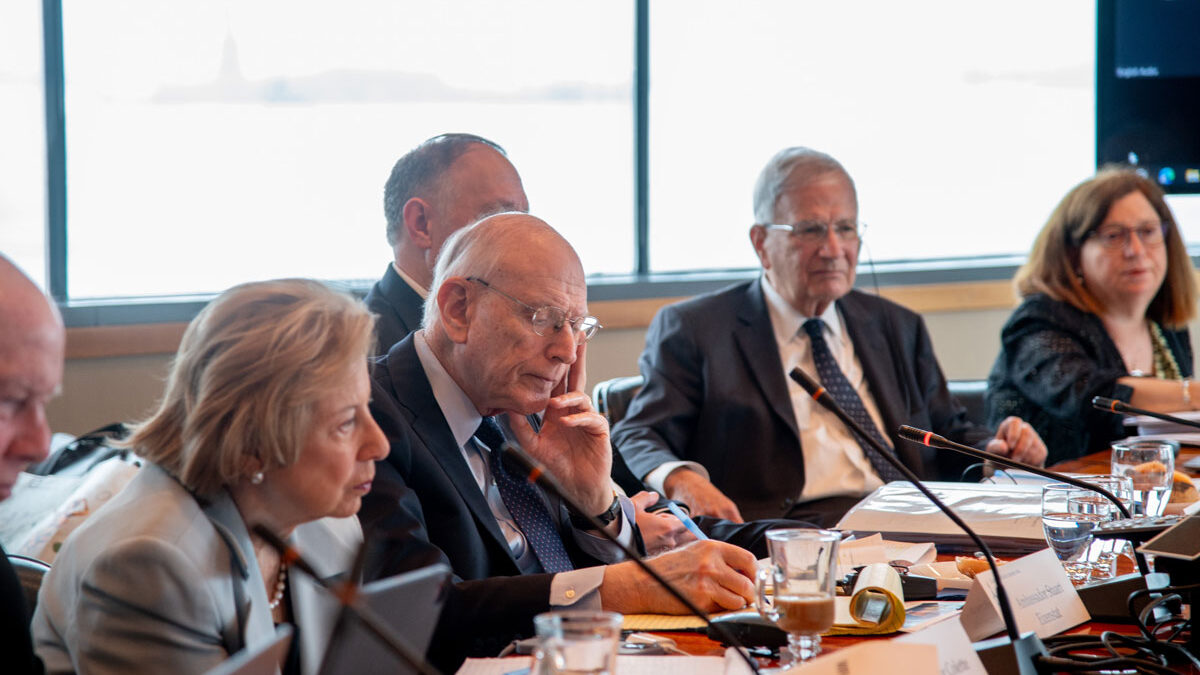
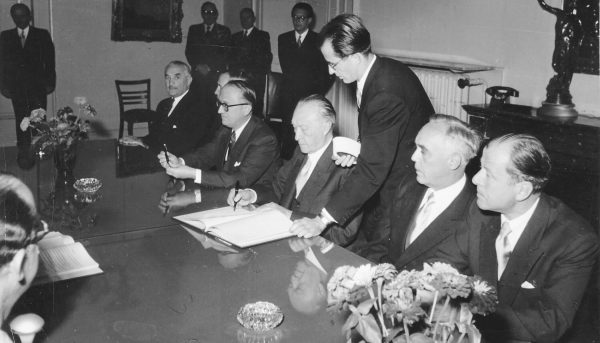
At the Executive Committee meeting in February 2007 in Warsaw, leaders of the Claims Conference/WJRO met with the then Prime Minister of Poland, Jaroslaw Kaczynski, and the Speaker of the Sejmto press for legislation on the restitution of private property stolen during the Holocaust. The U.S. Ambassador to Poland, Victor Ashe, and the Israeli Ambassador to Poland, David Peleg,accompanied the Claims Conference/WJRO delegation. In addition, during the meetings, Prime Minister Kaczynski committed to legislation by the end of the year, but indicated that compensation would be based on 15 percent of the value of the confiscated property. Progress on revising the draft legislation, as well as its enactment, has been delayed by the dissolution of Parliament and the national elections scheduled for October 2007, after which a new government coalition was formed. Representatives ofthe Claims Conference/WJRO have met with the new Prime Minister, Donald Tusk,who invited comments on procedural aspects of any property restitutionlegislation, which were submitted to the Prime Minister and to the Treasury Ministry,where such legislation will be drafted. Various other meetings have been held,including discussions with government officials regarding how to establish afair and transparent claims process.
The WJRO helped to establish the Foundation for the Preservation of Jewish Heritage in Poland, consisting of local and international Jewish representatives. The foundation, responsible for claiming formerly Jewish communal properties and managing any restituted properties, has filed more than 3,500claims for communal property (including cemeteries) located in areas in Poland without a Jewish presence. However, the recovery process for communal property has moved quite slowly as, over five years after the filing deadline, only about 20 percent of the communal claims have been resolved.
In March 2006, the Claims Conference and WJRO played an integral role in the re-opening of a Hungarian Holocaust compensation program to which thousands of potentially eligible victims of Nazism had not applied. In 1997, the government of Hungary established a symbolic compensation program for Holocaust survivors and the relatives of Holocaust victims, originally paying approximately $150 for each parent and $70for each sibling killed during the Holocaust. After expiration of the claims deadline and following efforts to raise the amount of compensation, the Hungarian government provided acknowledgment payments of around $1,800(400,000 forints) per deceased to be divided among any surviving parents,spouses, children or siblings.
However, this increased payment was limited to those Holocaust survivors and relatives of Holocaust victims who already had applied for the original payment announced in 1997. There were many relatives of Holocaust victims who did not apply during the filing period. The Claims Conference and WJRO continuously pressed the Hungarian government to re-open the claims process so that more victims’ relatives could apply for the increased compensation. In March 2006, the Hungarian government opened the claim period to new applications, initially with a July 31 deadline which was then extended until December 31, 2006. The Claims Conference urged the Hungarian government to provide applications and related information in multiple languages for the convenience of potential applicants and provided technical assistance in this regard. In addition, the Claims Conference has been attempting to alleviate certain burdensome evidentiary and time requirements imposed by the Hungarian government.
A limited financial settlement wasreached with the government concerning formerly Jewish-owned communal property. In addition, a foundation(MAZSOK) was established which, through modest government funding, provides pension supplements to local Jewish Holocaust survivors.
Private property restitution laws in Hungary did not provide for the return of any property, limited severely the compensation paid for property, and made it difficult to submit claims, especially for foreignapplicants.
Recently, the Claims Conference/WJRO has obtained the agreement of the Hungarian government to establish a joint committee, consisting of government officials and Jewish representatives,including from the WJRO, to address all remaining open restitution issues,including heirless property, insurance and looted art.
The Caritatea Foundation, jointly established by the Federation of Jewish Communities in Romania and the WJRO, assumed responsibility for preparing and submitting communal claims, as well as for managing any returned properties. However, few of the 1,980 communal claims submitted by the Foundation from 2002-2005 have been resolved to date.
Romania enacted legislation in 2001 establishing a restitution process for confiscated private property. The claims process proved to be complex and, generally, ineffective.After the expiration of the claims filing deadline, Romania passed a new law that addresses many inadequacies in the private property claims program.However, the filing deadline was not reopened. There is also concern that the Property Fund, the mechanism for compensating former owners–of both private and communal property–when the actual property cannot be returned, may have insufficient funds, in addition to a number of other serious problems. The government recently enacted legislation that attempts to expedite the implementation of an effective Property Fund.
In Latvia, a bill that would have provided compensation to the Jewish community for formerly Jewish communal property, among other assets, was defeated in Parliament.The local Jewish community has requested that the WJRO take the lead in reviving and trying to have the proposed legislation enacted. In Lithuania, active negotiations have gone on for six years, which resulted in an agreement between the government and Jewish representatives regarding proposed legislation providing for a maximum amount of compensation for formerly Jewish communal property.The government, however, continues to find excuses for not submitting the proposed legislation to Parliament.The Claims Conference/WJRO is engaged in a strategy to press the government to move the legislation along and see to its passage.
Legislation and claims processes in other Central and Eastern European countries are also being monitored, including the following: Bosnia-Herzegovina, Bulgaria, Croatia, Czech Republic, Serbia (which has recently enacted a communal property restitution law and has published a draftlegislation regarding which the WJRO has submitted comments to the government), Slovakia, Slovenia(where WJRO negotiations with the government are tentatively scheduled to begin in the fall of 2007), and Ukraine.
The effort to enact effective property restitution laws is laden with difficulties, as the circumstances in each country concerning communal and private property vary considerably. Some governments, for example, limit the type of communal property that can be recovered to houses of worship, or only permit use (but not ownership) of formerly owned communal property. Further, the pace of resolving claims in countries that do have a communal claims process is often quite slow, with some countries permitting claims only for properties seized after 1945. Other countries discriminate against foreign former owners, either forbidding non-citizens from claiming their former property, or from receiving their actual property back. Others still drastically limit the amount of compensation awarded.In addition, many claims processes place difficult evidentiary and other procedural burdens upon claimants.
The Claims Conference is assisting the WJRO in each of these countries in efforts to improve the process for restitution of or compensation for communal and private property and to address the issue of heirless property.