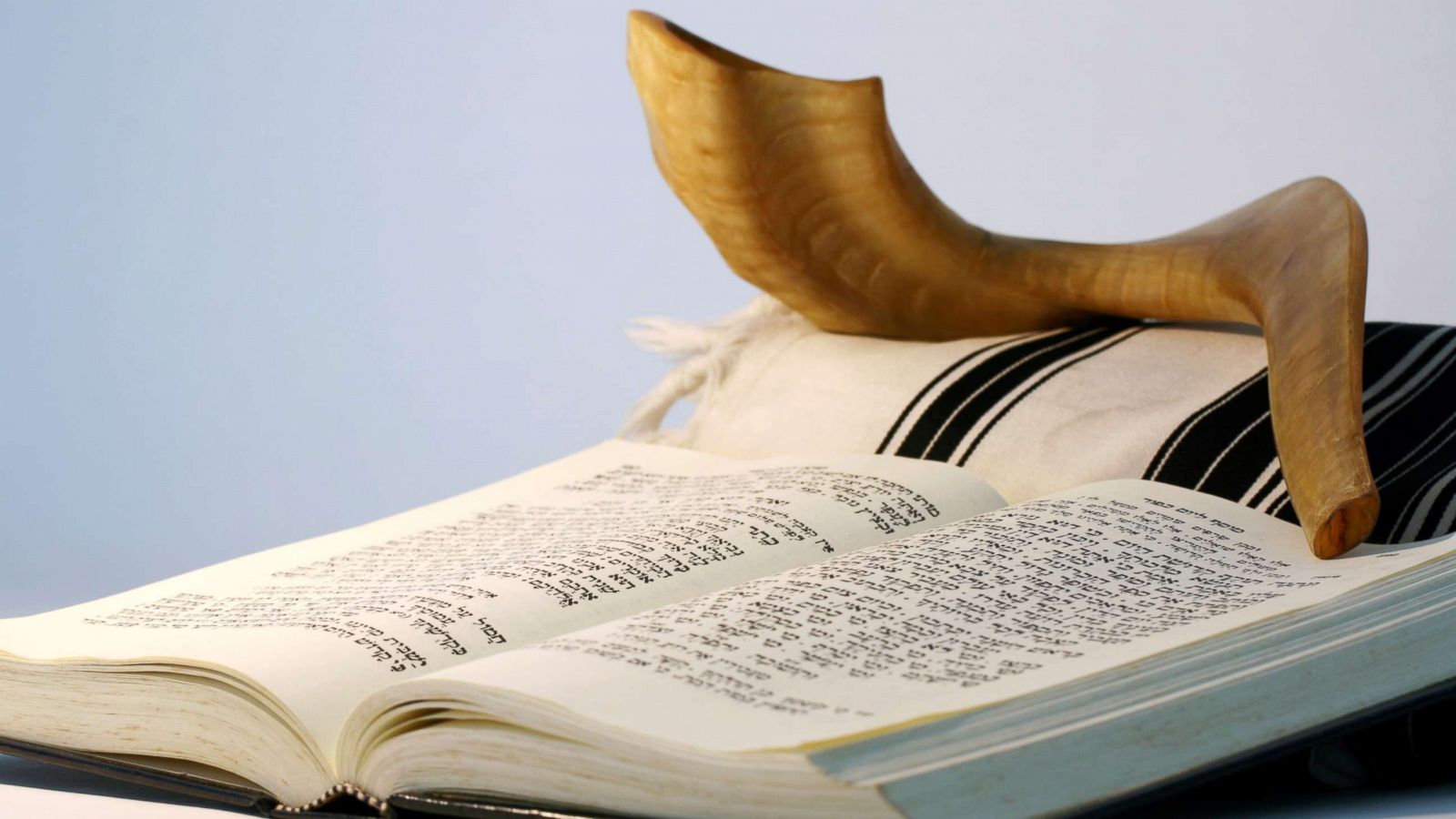
For each of us, Yom Kippur means something different. It can be a time of introspection, repentance, and prayer. It can be defined by the ease or harshness of our fast, the number of hours spent in synagogue, or focused on the one person we most wish to ask forgiveness.
It is also a time for memory. In congregations around the world, we dedicate part of Yom Kippur services to the recitation of the Eleh Ezkerah, or These I Will Remember, which recalls the torture and murder of ten leading rabbinic figures at the hands of the Romans. It has been expanded over the centuries to include other martyrs of the Jewish people from various chapters of our history of persecution, including the Spanish Inquisition and the Holocaust.
In my synagogue here in New York City, we have a long tradition of having survivors and their descendants share their histories during this part of the service. Hearing these survivor voices over the decades, especially on the most solemn day on the Jewish calendar, does not just remind us of what our people have endured, but how we can transform tragedy into strength and resilience.
Nina Bassat AM (Member of the Order of Australia) is one survivor who serves as an outstanding example of the power of such testimony to impact hearts and minds. A Claims Conference Board Member and noted Jewish community leader in Australia, Nina has been an especially powerful voice in the face of rising antisemitism and the aftermath of the massacre at Bondi Beach.
Her recent testimony to Australia’s Royal Commission on Antisemitism and Social Cohesion is both powerful and evocative. I urge you to read it here and watch the video of her below and share it with your family, friends, and wider networks.
“The historical context of what happened in Germany in 1934 is well known to those of my generation – the use of propaganda and misinformation; the scapegoating of Jews as the cause of the world’s evils; the silence of the majority and the consequent complicity; the perversion of the legal system and of norms and language. On 29 January 2024, I was the speaker at the United Nations Holocaust Remembrance Day Commemoration in Melbourne, on the topic of The Fragility of Democracy. I reflected on how Germany fell from being a republic to a totalitarian regime within a matter of days. The groundwork had been laid by propaganda and demonisation of Jews to enable this to happen. My awareness of this history makes me conscious of the need to guard our democracy, our civility of discourse and the dignity of all Australians.”
– Nina Bassat AM, testimony to Australia’s Royal Commission on Antisemitism and Social Cohesion
Nina was born in Lwów, Poland (now Lviv, Ukraine) in 1939. During the Holocaust, Nina and her mother were forced to live in the Lwów ghetto for 18 months, escaping in 1943 and living in hiding for the remainder of the war. Nina was one of only four members of her family to survive the Holocaust. In 1949, Nina and her mother left the Displaced Persons camp in Germany for a new life in Australia.
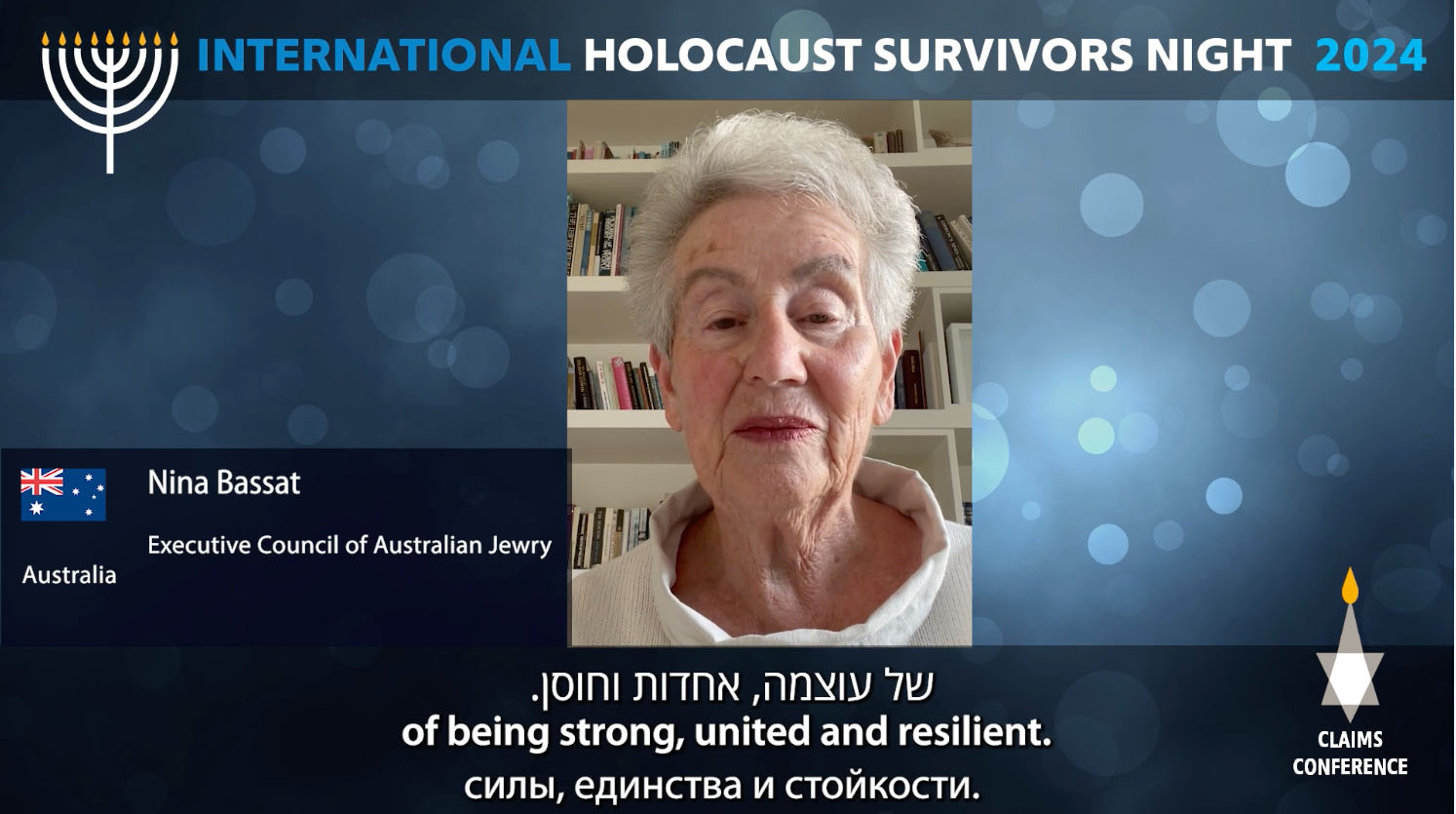
The resilience Nina developed as a child survivor of the Holocaust became the driving force in her life’s work. After studying arts and law at the University of Melbourne, building a family, and starting her own legal practice, she channeled her experiences into becoming a community leader and advocate. In 2004, she was appointed a Member of the Order of Australia in recognition of her leadership in prominent Jewish organizations and her dedication to fostering greater community understanding. As the first woman President of the Jewish Community Council of Victoria, the first Holocaust survivor to serve as President of the Executive Council of Australian Jewry, and through her work on the Claims Conference board and through her powerful videos for our International Holocaust Survivors Night each Chanukah, Nina transformed the darkness of her youth into a powerful voice for those vulnerable in her community and in the battle against hate.
Amplifying the voices of survivors like Nina is something we do at the Claims Conference, in addition to providing compensation and critically needed welfare services like home care to tens of thousands of survivors. Through our social media campaigns, VR, film, new media projects, the Survivor Speakers Bureau, and much, much more, hundreds of thousands of people learn from their experiences and insights. They have become central to our efforts educating young people and the wider public about the Holocaust and how quickly words of hate can become acts of violence. The voices of survivors offer an alternative to the cruelty and division that our world is suffering from today—the possibility that things can and should be different.
In a recent interview for the Australian Broadcasting Corporation following her testimony, Bassat said, “The fact that when the commission listened to the lived experience, this was done with immense sensitivity and with kindness and it had a cathartic effect on many in our community, and I’m sure it also did on the witnesses … I have hope.”
The anchor of Yom Kippur, like the story of survivors like Nina, is hope—hope for the future, hope in life renewed and rebuilt, and hope that we can do better and be better in the year ahead.
May we realize the promise of that hope in our world and pass it on to future generations.
G’mar chatimah tovah.
Gideon Taylor,
President