Judah Gribetz z”l
Claims Conference in the Media | Press Inquiries | Publications | Videos | Updates
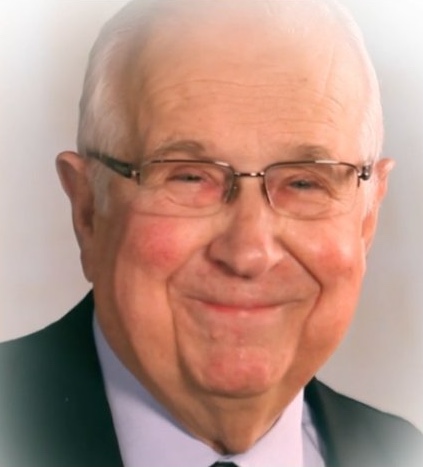
It is with a heavy heart that we inform you that Judah Gribetz z”l, our esteemed colleague and a dear friend of the Claims Conference, passed away at his home on Friday, June 26, 2026. A distinguished attorney whose career extended over seven decades, Judah worked tirelessly as a dedicated public servant and relentless advocate for the Jewish people.
Born in New York City on April 1, 1929, and raised in Crown Heights, Judah was one of three sons of Ida and Abraham Gribetz, an immigrant from Russia who became Executive Director of the Hebrew Free Loan Society. Judah graduated from Columbia in 1949, then received his law degree from Columbia Law School and his Master of Laws degree from New York University. While his two brothers, Donald and Irwin, became well-known New York pediatricians, Judah served for three years in the U.S. Navy during the Korean War. After his military service, Judah launched his distinguished legal career.
Among his leadership positions: Mayor Robert Wagner appointed Judah as Assistant Corporation Counsel at the Law Department of the City of New York and then appointed him to serve as Buildings Department Commissioner; he became Regional Administrator of Housing and Urban Development (for New York and New England) in President Lyndon Johnson’s administration; he served as Deputy Mayor for Governmental Relations under NYC Mayor Abraham Beame; and he became Counsel to New York Governor Hugh Carey during the height of New York’s serious fiscal crisis in the mid-1970s. He is widely credited with helping steer New York City through that fraught era. Through his government service, Judah built a reputation for aggressive prosecution of slumlords, building public housing and working against racial housing discrimination in New York City. Both in government and during his decades in private legal practice, Judah was recognized as one of New York’s most respected lawyers.
At the same time, Judah dedicated enormous time and energy to Jewish communal life, as he served for many years on the board and then as President of the Hebrew Free Loan Society, President of the Jewish Community Relations Council and as a Trustee of the Museum of Jewish Heritage (as well as of the City University of New York and Mt. Sinai Medical Center), among others.
Perhaps among his most lasting contributions was his work on behalf of Holocaust survivors. In 1999, Edward R. Korman, Chief Judge of the Eastern District of New York, appointed Judah as Special Master to develop an allocation plan to distribute the $1.25 billion Swiss Banks Settlement to five different categories of victims and among several different categories of claims (for Swiss bank accounts, slave labor, looting and refugees). After engaging in extensive research and working together with Deputy Special Master Shari Reig, now Director of Policy Affairs at the Claims Conference, a 900-page “Special Master’s Proposed Plan of Allocation and Distribution of Settlement Proceeds” was prepared and approved by Judge Korman. The plan entrusted the Claims Conference with the responsibility for administering payments to a designated group of Jewish Holocaust survivors and to organizations providing assistance to survivors. Judge Korman noted that Judah was an “extraordinarily able lawyer with a long record of distinguished public service [as well as a] wise counsel,” and requested that Judah continue to assist the Court with administration and oversight of the distribution process. As the Special Masters’ 2,000+ page Final Report notes, as a result of these efforts, more than 450,000 Jewish Holocaust victims and their heirs, in approximately 80 countries, received nearly $1.3 billion in compensation (a sum exceeding the Settlement Amount).
Judah will not only be remembered for his remarkable professional career – leaving an enduring mark on New York City government and having had a profound impact on the efforts to advance justice for Holocaust survivors – but also for his wisdom, humility and integrity. An exceptionally gifted public servant as well as an exceptional person in his private life, Judah’s legacy lives on in the institutions he strengthened, the laws and policies he helped shape and the countless individuals whose lives were touched by his dedication to justice.