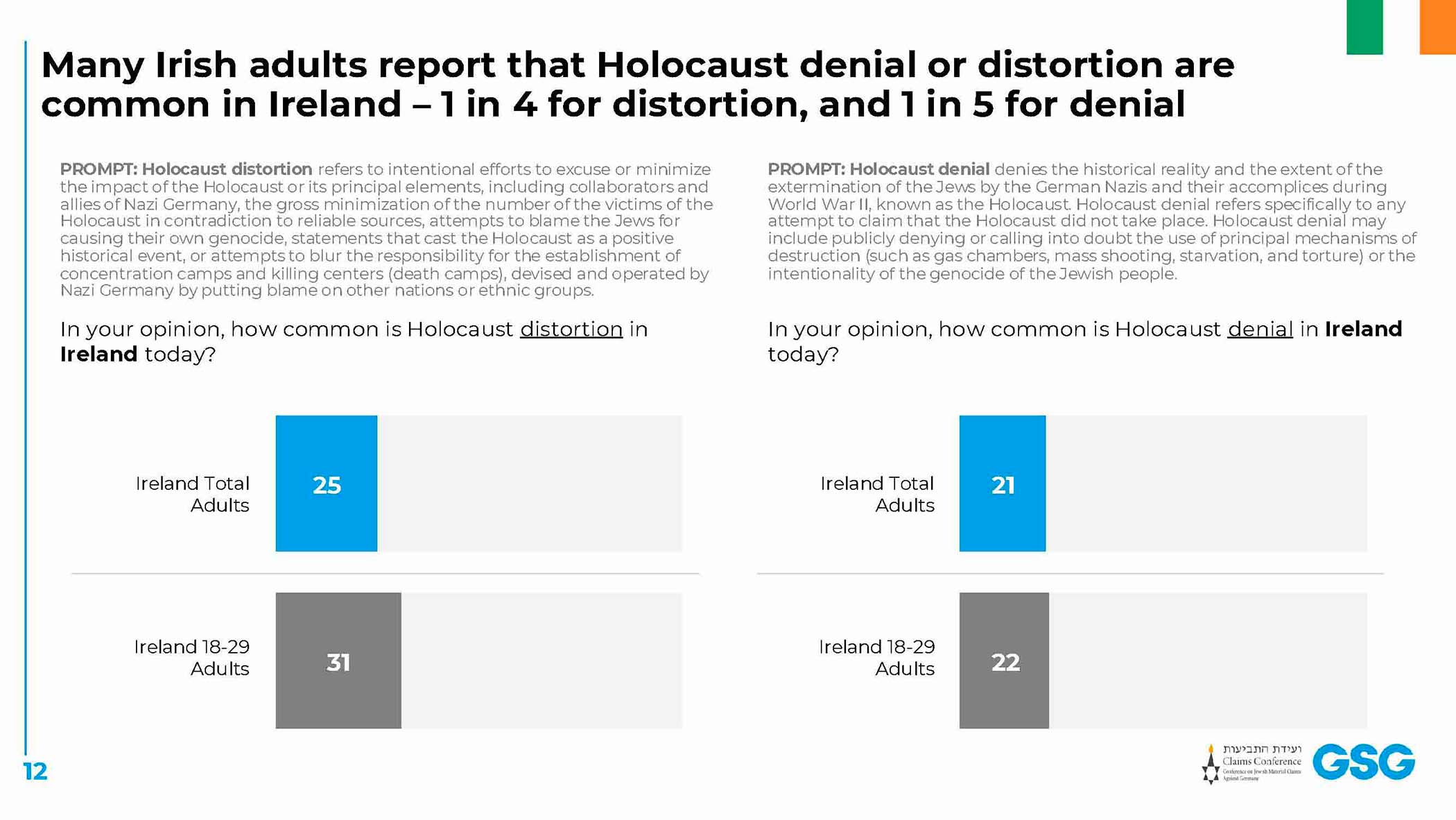
A Quarter Of Irish Adults Say Holocaust Distortion Is Common In Ireland, And One In Five Say Holocaust Denial Is Common.
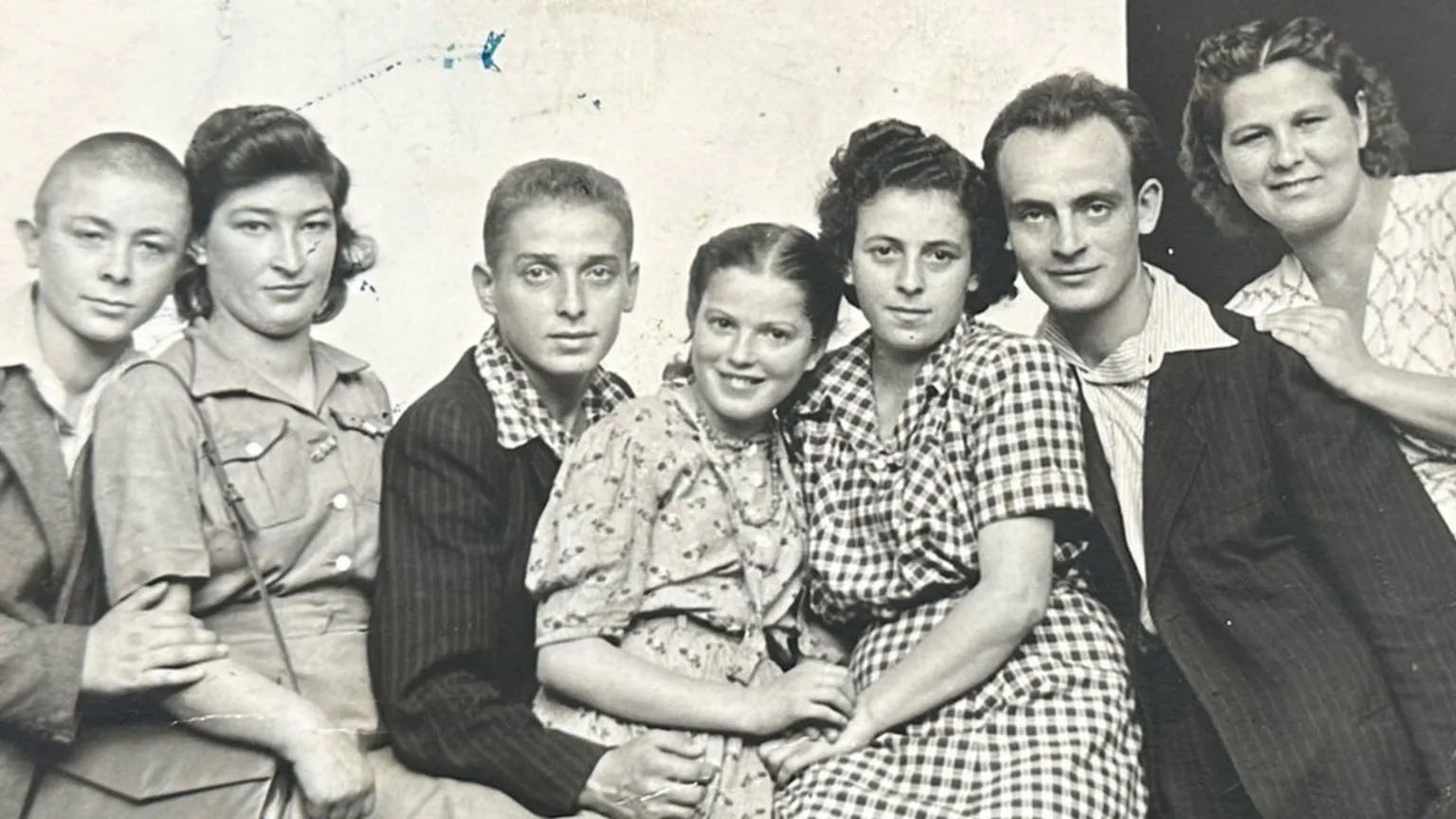
The Claims Conference has conducted nine surveys across eleven countries examining Holocaust knowledge and awareness worldwide
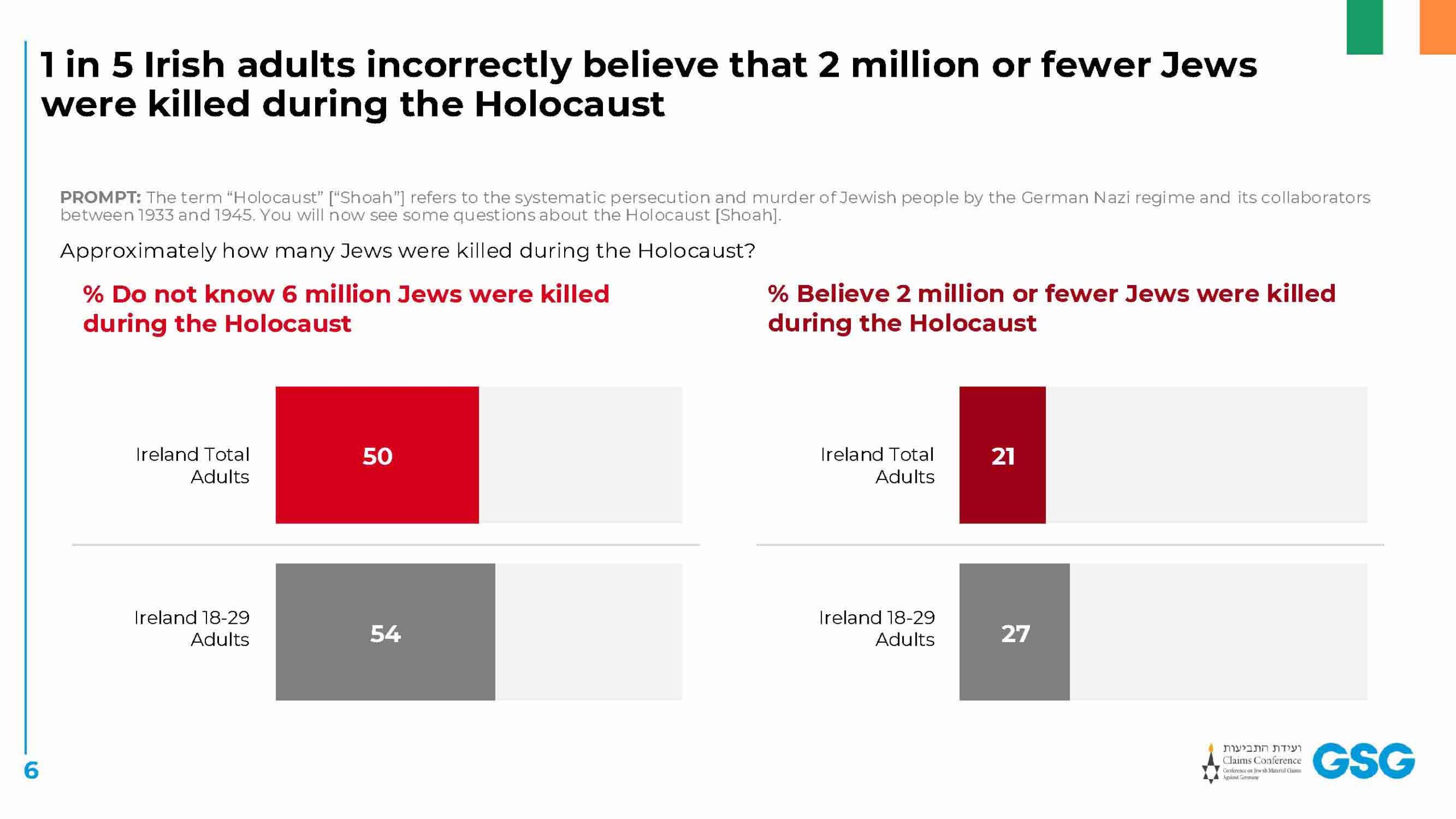
The Conference on Jewish Material Claims Against Germany (Claims Conference) today released a Holocaust Knowledge and Awareness Survey of Irish Adults. 50 percent of all adults surveyed and 54 percent of younger adults aged 18 to 29 did not know that 6 million Jews were murdered in the Holocaust.
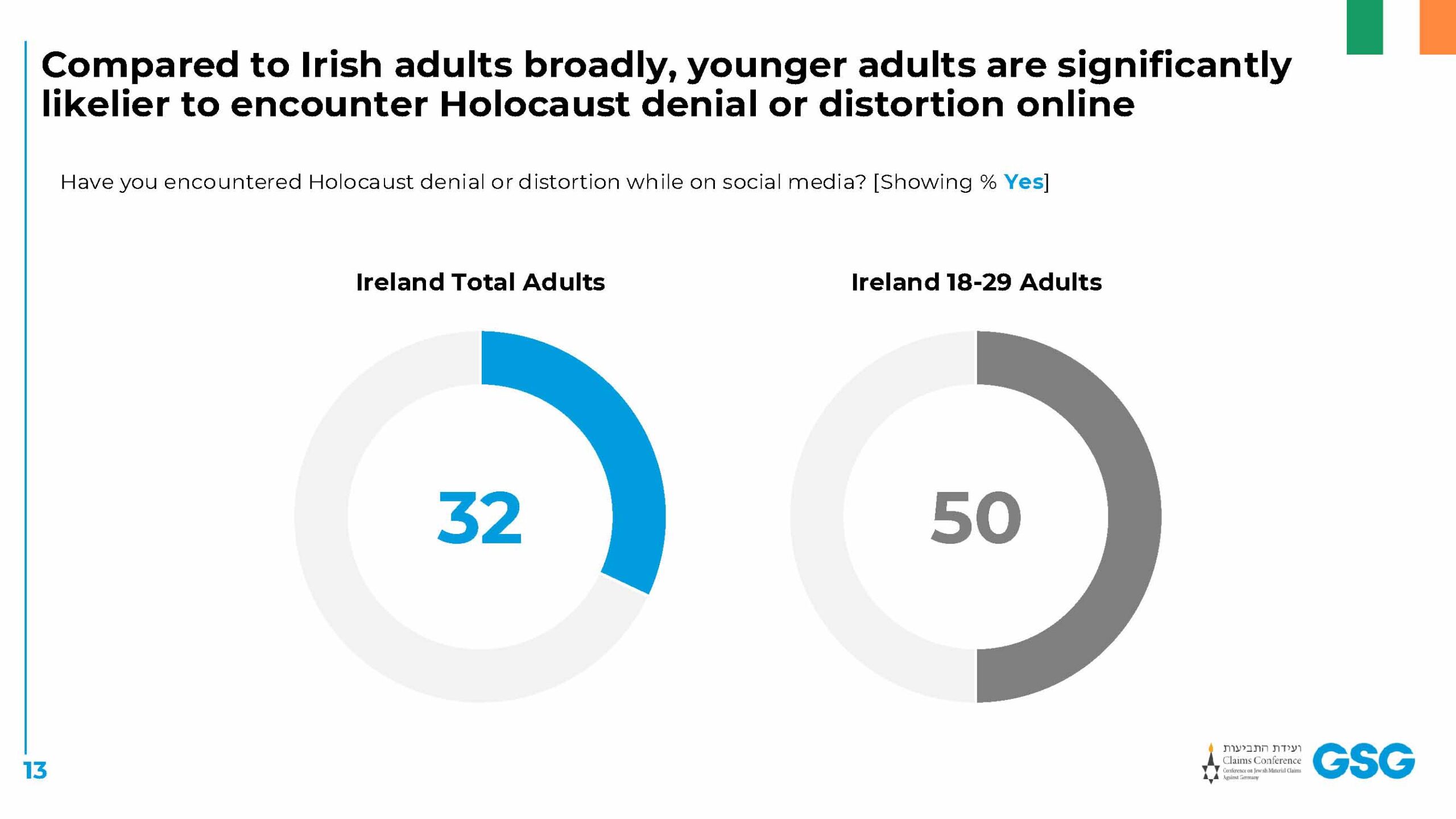
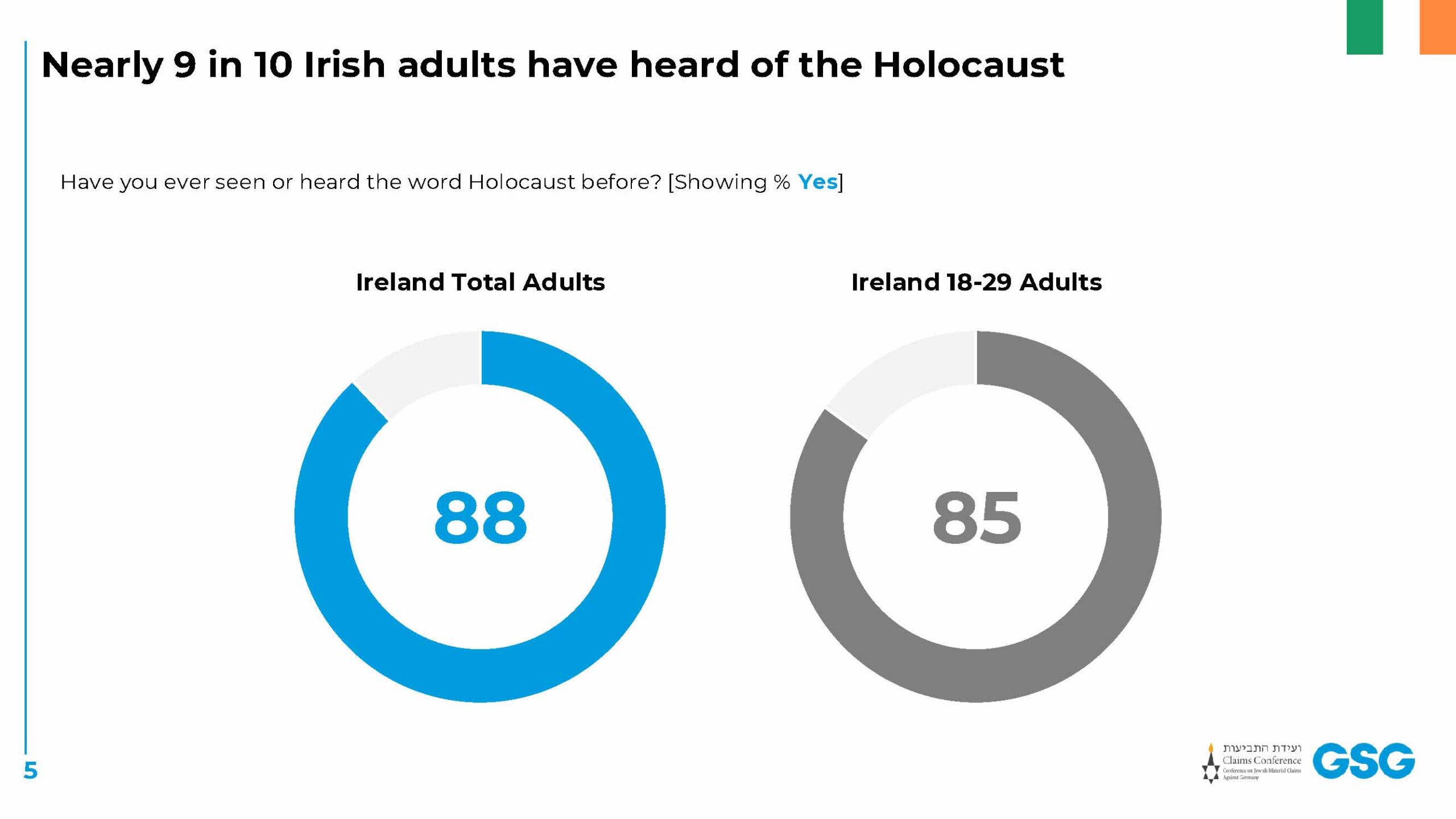
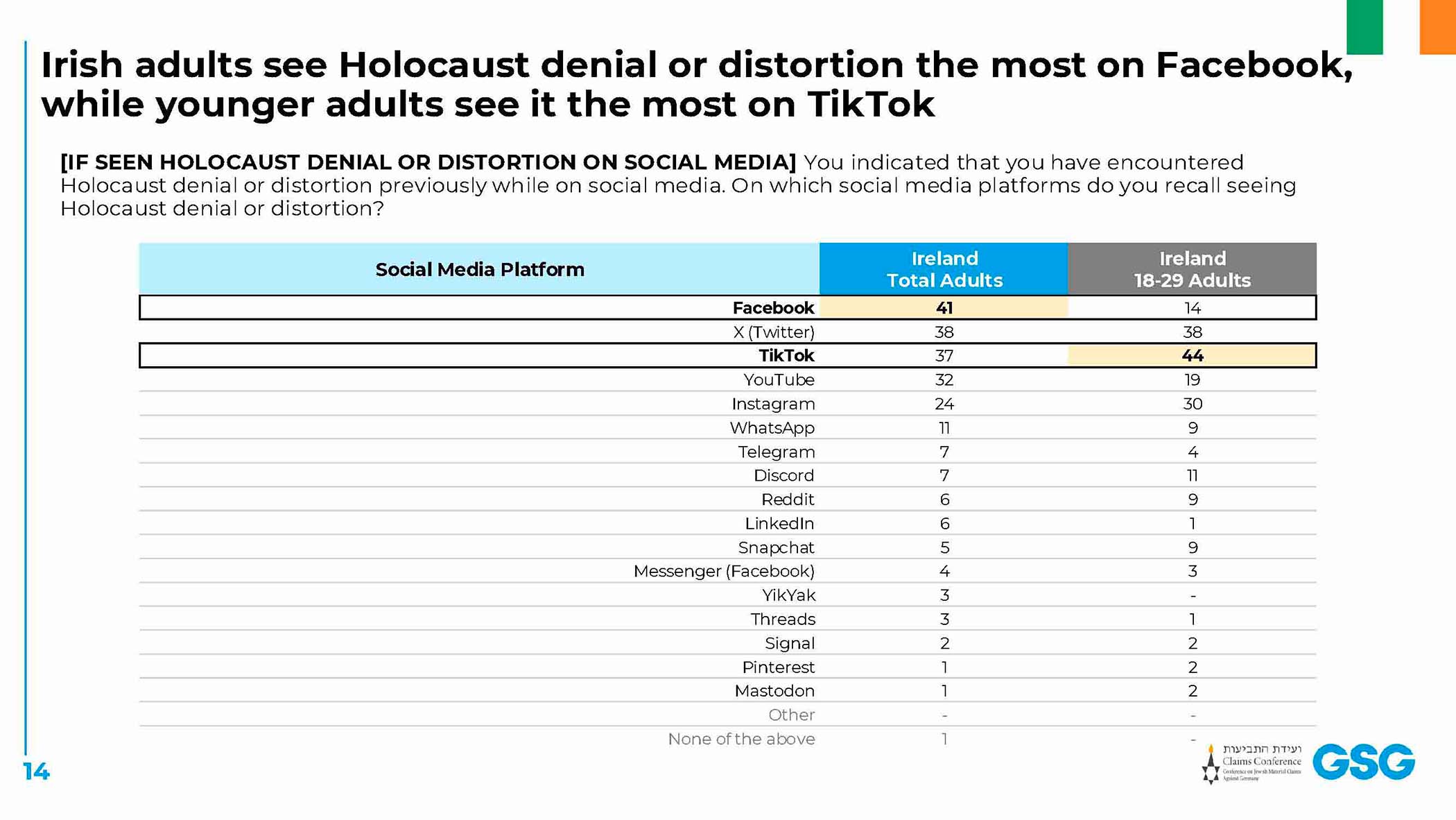
While overall awareness about the Holocaust is high among survey respondents, participants also say Holocaust denial and distortion are high. A quarter of adults overall say Holocaust distortion is common in Ireland, while 21 percent say Holocaust denial is common. 50 percent of adults ages 18 to 29 say they encountered Holocaust denial or distortion on social media, with TikTok, X (Twitter) and Instagram being highlighted as the platforms where denial or distortion are encountered most frequently.
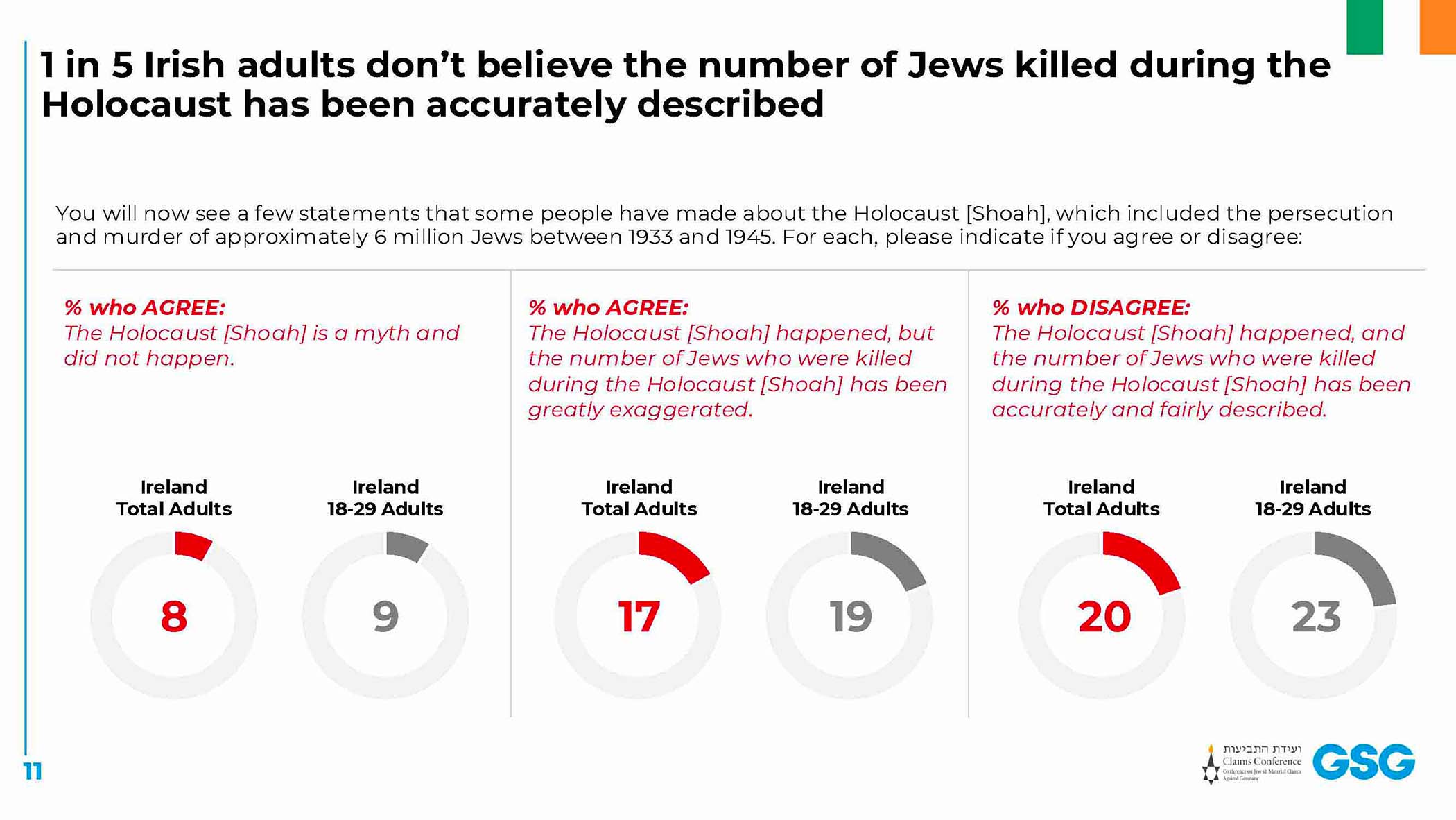
The survey showed that 9 percent of adults age 18 to 29 believe the Holocaust is a myth and did not happen, and 19 percent believe the Holocaust [Shoah] happened, but the number of Jews who were killed during the Holocaust has been greatly exaggerated.
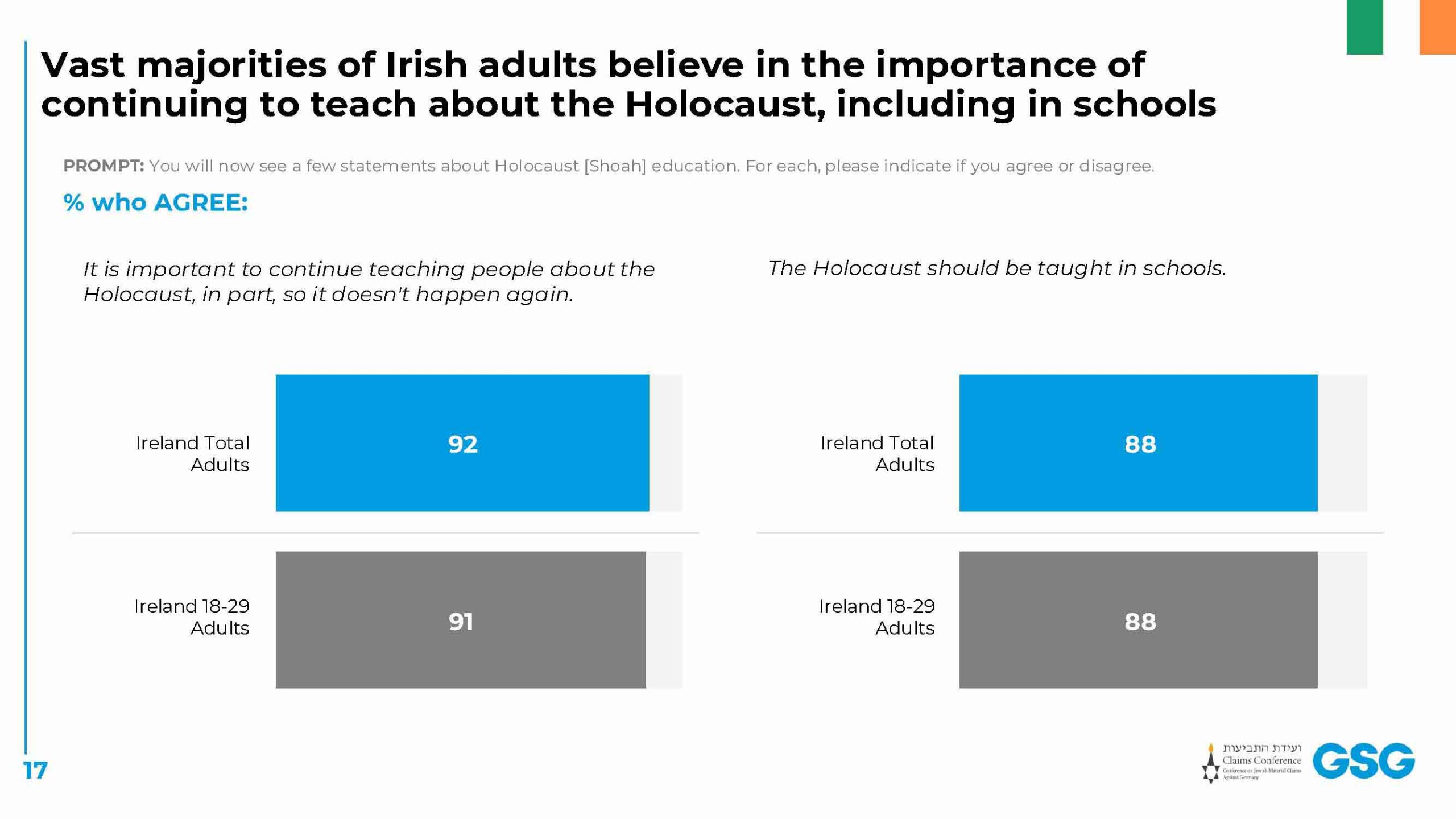
At the same time, respondents overwhelmingly agree that Holocaust education is important. With 91 percent of young adults ages 18 to 29, and 92 percent of adults overall saying it is important to continue teaching about the Holocaust, in part, so it doesn’t happen again. 88 percent of those same respondents believe the Holocaust should be taught in schools.
This survey is the latest released by the Claims Conference in its ongoing mission to understand the current state of Holocaust education and improve opportunities to increase Holocaust knowledge and awareness globally.
Gideon Taylor, President of the Claims Conference said, “Understanding how the Holocaust is remembered is core to our mission behind these surveys. This data provides a foundation needed to strengthen Holocaust education as a means to combat hatred. It also comes at a time when antisemitism, hate crimes against Jews and Holocaust denial and distortion are on the rise globally. These results in Ireland show both cause for significant concern and at the same time a path forward given the overwhelming support for Holocaust education.”
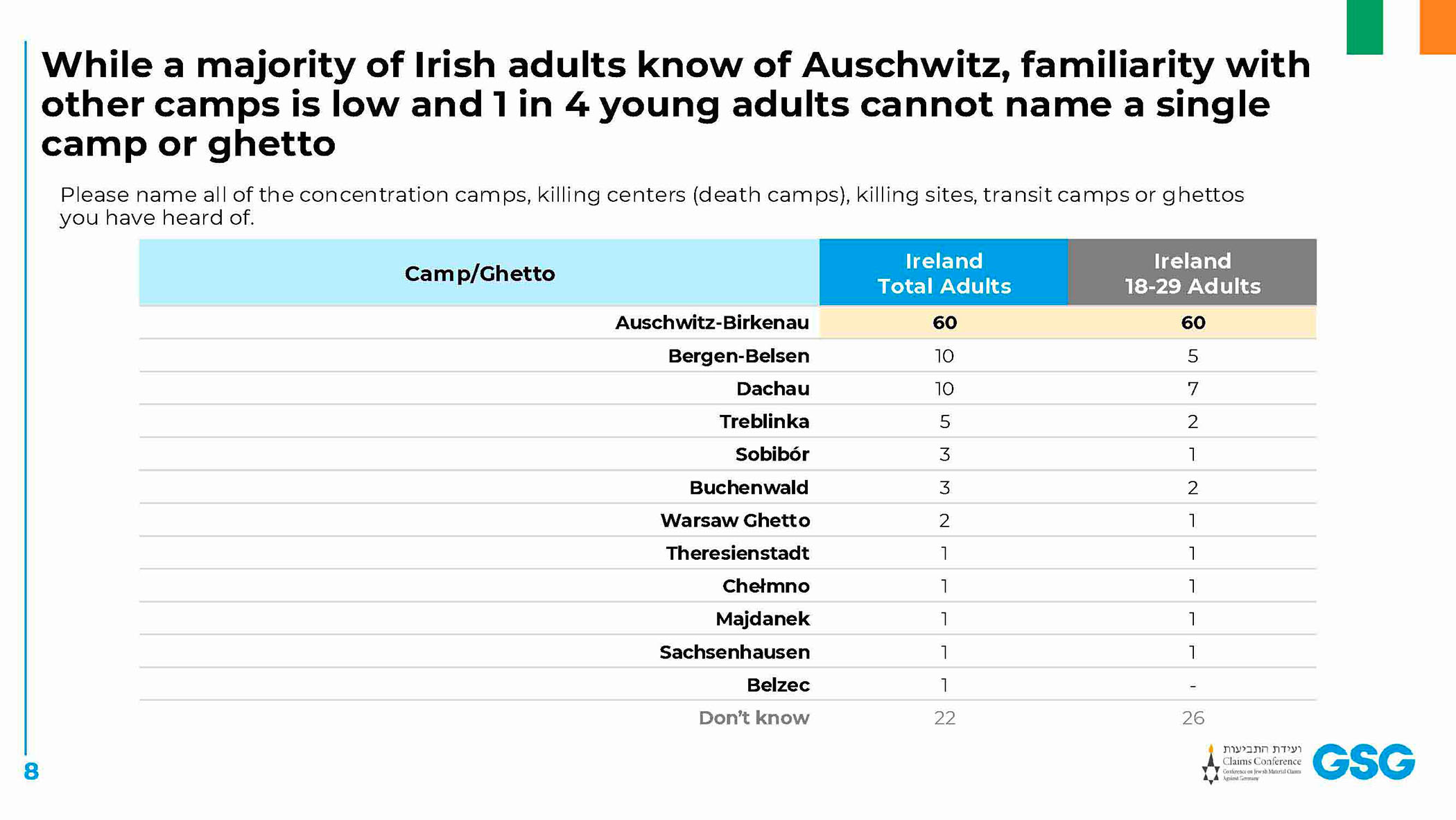
A majority of Irish adults (60 percent) know of Auschwitz, the infamous death camp employed by the Nazis. At the same time, 1 in 4 young adults aged 18 to 29 were not able to name one of the more than 40,000 camps and ghettos in Europe during the Holocaust.
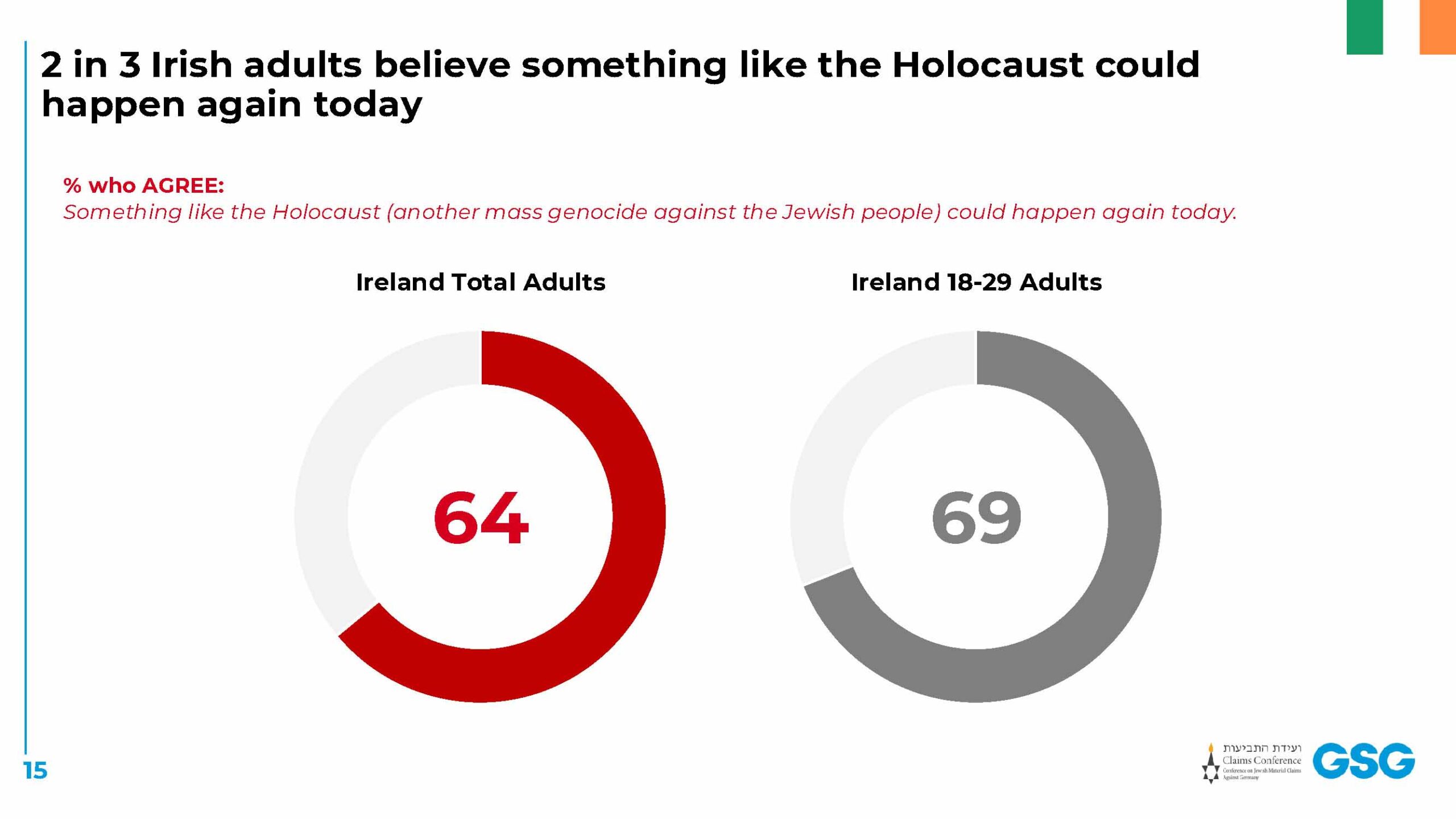
64 percent of Irish adults overall believe something like the Holocaust (another mass genocide against Jewish people) could happen again today. This aligns with previous surveys in other European countries, where 69 percent of U.K. adults and 63 percent of French adults surveyed also believe something like the Holocaust could happen again.
Matthew Bronfman, Claims Conference Index Task Force Chairman, said, “I am heartened to see the unifying idea that extends not only to this survey but also across all 16 studies we have completed in 11 countries: More Holocaust education. The public mandate is clear. We must deliver an education system that supports teachers with the resources they need to ensure students gain robust and complete understandings of the Holocaust.”
The data from this survey of Irish adults is part of the global index of Holocaust Knowledge and Awareness data being compiled by the Claims Conference. The construction of the global index is made more urgent by the increase in antisemitism, as well as Holocaust denial and distortion.
Greg Schneider, Claims Conference Executive Vice President, said, “Fifty percent of young people in Ireland say they have seen Holocaust distortion or denial online. Given that 92 percent of the Irish public believes it is important to teach about the Holocaust, this raises an important question: How can Ireland best respond to this challenge?”
Oliver Sears, founder of Holocaust Awareness Ireland said, “As the Holocaust moves away from us in time, we must redouble our efforts to educate young minds to whom this legacy will be entrusted. Combatting Holocaust denial and distortion on the internet and social media must be a priority. It is very encouraging to read that an overwhelming percent of Irish people believe that Holocaust education should be taught in schools. We must ensure our educators are equipped to teach a comprehensive history of the Holocaust.”
Maurice Cohen, Chair of the Jewish Representative Council of Ireland, said, “Half of Irish adults do not know that six million Jews were murdered, one in five doubts the truth of the Holocaust and half of young people are seeing denial online. Yet almost nine in ten want it taught in schools. This is not a lack of public will. It is a gap in our education system. The public overwhelmingly wants Holocaust education. When 64 percent of Irish people believe another Holocaust could happen and 50 percent of young adults are already seeing denial online, this is no longer history. It is a warning.”
Overall Key Findings
That number drops among younger adults aged 18 to 29, 54 percent of whom do not know that 6 million Jews were killed during the Holocaust, and 27 percent of younger adults aged 18-29 believe 2 million or fewer Jews were killed during the Holocaust.
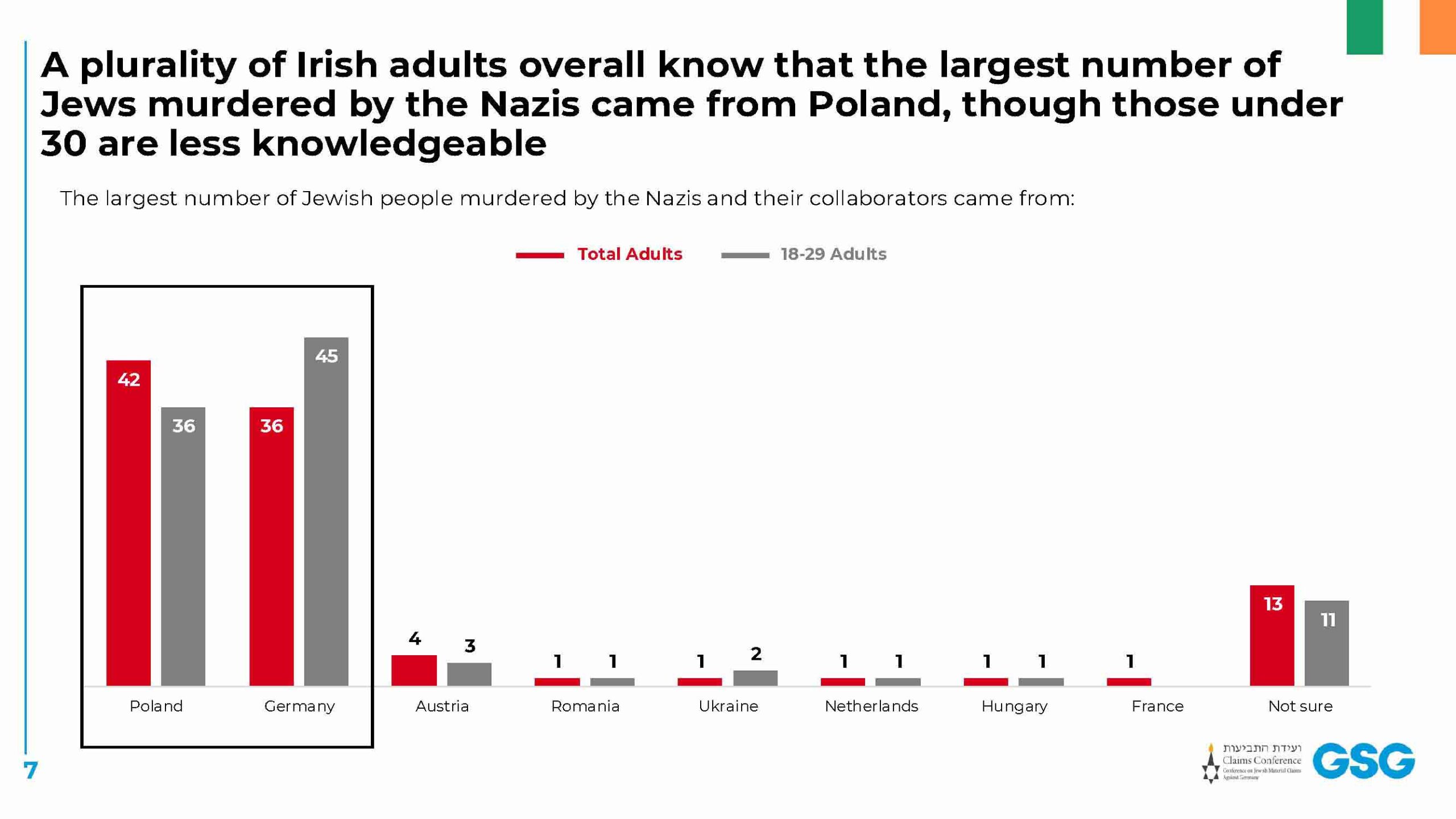
A plurality of Irish adults overall knows that the largest number of Jews murdered by the Nazis came from Poland (42 percent); though, again, young adults age 18 to 29 are less knowledgeable, with 36 percent knowing that the largest number of Jews murdered came from Poland.
20 percent of adults overall (23 percent of young adults aged 18 to 29) disagree that the number of Jews who were killed during the Holocaust has been accurately and fairly described.
While a majority of Irish adults (60 percent) know of Auschwitz, the infamous death camp employed by the Nazis, overall familiarity with other camps and ghettos is low among all adults. 1 in 4 young adults aged 18 to 29 could not name a single one of the more than 40,000 concentration camps and ghettos employed by the Nazis during World War II.
21 percent of Irish adults say that Holocaust denial is common. These numbers are slightly higher among younger adults aged 18 to 29, with 31 percent saying distortion is common and 22 percent saying that denial is common.
88 percent of Irish adults believe the Holocaust should be taught in schools.
Further Key Findings
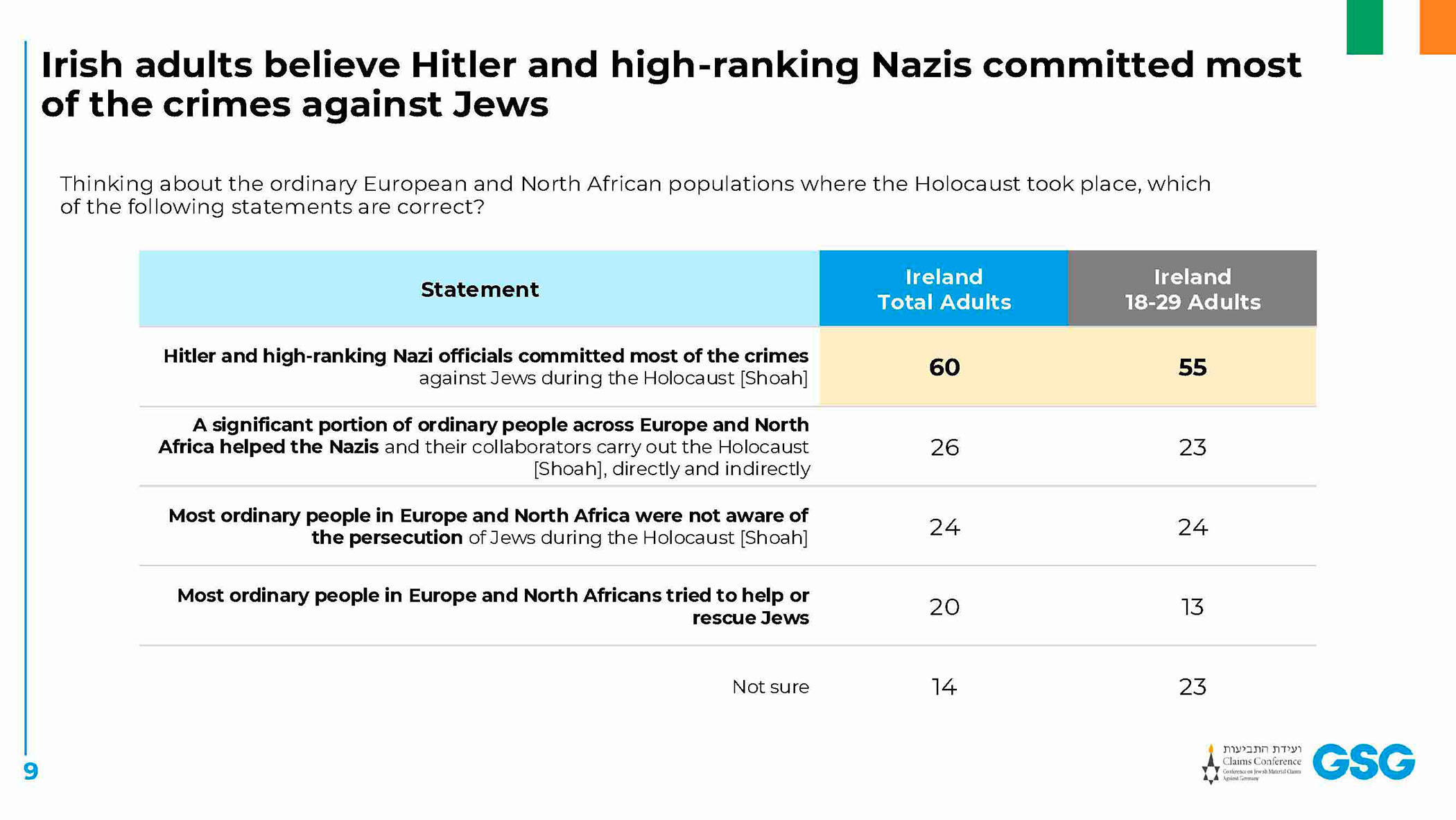
- 60 percent of Irish adults believe Hitler and high-ranking Nazis committed most of the crimes against Jews during the Holocaust.
- Younger adults are significantly more likely to encounter Holocaust denial or distortion online, with a full 50 percent of young adults saying yes, they have seen denial or distortion online, compared to only 32 percent of adults overall.
- When asked which social media platforms Holocaust denial or distortion was encountered on, young adults aged 18 to 29 listed TikTok (44 percent), X/Twitter (38 percent) and Instagram (30 percent), compared to adults overall who listed Facebook (41 percent), X/Twitter (38 percent) and TikTok (37 percent).
- An alarming high number of Irish adults – 64 percent of adults overall and 69 percent of young adults aged 18 to 29 – believe something like the Holocaust (another mass genocide against the Jewish people) could happen again today.
- A vast majority of Irish adults believe in the importance of continuing to teach about the Holocaust. 92 percent of adults overall believe teaching the Holocaust is important, in part, so it does not happen again; and 88 percent believe that the Holocaust should be taught in schools. These numbers are mirrored in their younger cohort, with 91 percent of young adults aged 18 to 29 believing teaching the Holocaust is important, in part, so it does not happen again; and 88 percent believing that the Holocaust should be taught in schools.
Survey Methodology and Sample
This data on Ireland was commissioned by the Claims Conference. Data was collected by Global Strategy Group, with a representative sample of 1,000 adults in Ireland ages 18 and over between October 15, 2025, and November 6, 2025. The margin of error is +/- 3.1%.
The Holocaust Knowledge and Awareness Index was commissioned by and with assistance from the Conference on Jewish Material Claims Against Germany and supported by the German Federal Ministry of Finance.
Key Findings and Topline Results
Cross-Country Comparative Data