Emergency Assistance for Holocaust Survivors in Israel
Claims Conference in the Media | Press Inquiries | Publications | Videos | Updates
At a time when sirens sound and uncertainty shapes daily life across Israel, Holocaust survivors—who have already endured unimaginable hardship—are once again living under the weight of fear and disruption. For many, this moment is not only a present-day crisis, but an echo of past trauma.
Our responsibility to survivors is unwavering.
The Claims Conference exists to ensure that Holocaust survivors globally can live with dignity, security, and care. In moments like this, that mission becomes even more urgent. Because of the infrastructure we have built over decades with trusted partners across Israel, we are already there: in survivors’ homes, in their communities, and in constant contact with those most vulnerable.
Our network allows us to respond immediately, thoughtfully, and at scale, ensuring that even in the midst of conflict, not one of the nearly 95,000 Holocaust survivors in Israel is forgotten or left without support.
A message of gratitude from a survivor in Haifa
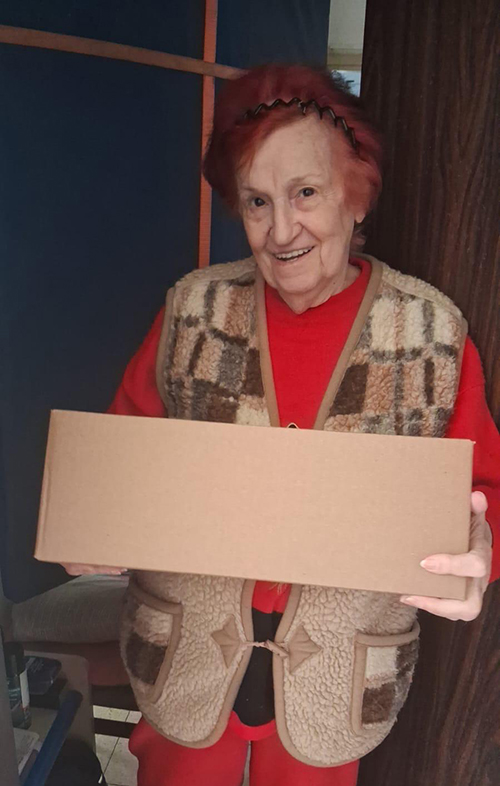
My name is Alexandra. I received your gift with great joy. I understand that someone prepared this meal with effort, from the heart, and with great respect for us, the elderly, because it is very tasty. Even one large portion is enough for more than one day. I took one for myself and gave some to others like me, to those who are also Holocaust survivors. It was a surprise for them, and that made me happy as well.
It was also unexpected for me, as I had been ill for two weeks, and your gift arrived at just the right time.
Thank you from the bottom of our hearts.
Respectfully,
Alexandra Anilevich, Haifa
Below, some of the key programs currently in place are summarized:
- Food assistance: Through our partnership with Latet, monthly food packages are already provided to 1,500 vulnerable Holocaust survivors across Israel. Because Latet is already in direct contact with these individuals on an ongoing basis, the organization is able to identify emerging needs immediately and relay them quickly through the existing support systems. In addition, during the current wartime period, using the existing infrastructure, we have already provided additional funding to expand the program to include approximately 1,000 Holocaust survivors.
- Home care services: Through the Keren L’Harvacha L’Nitzulei Hashoah, we support home care services for more than 50,000 Holocaust survivors. These services involve a network of case managers and home care workers who are in regular contact with survivors in their homes. We are monitoring the provision of ongoing services, particularly closely during the war period, to ensure continuity of care. This extensive field network also provides a critical channel through which emerging needs can be quickly identified and addressed.
- Emergency outreach through Eshel: We are currently working with Eshel to maintain contact with approximately 30,000 Holocaust survivors across Israel who are eligible for Hashlamat Hachnasah and represent the most economically vulnerable members of the survivor community. Through this program, we are reaching approximately 1/3 of the entire Israeli Holocaust survivor population, providing monthly financial assistance to combat food insecurity through food cards. Because Eshel already knows these survivors, we were able to reach out proactively, provide food supplements, and assess needs during the current emergency. We are also in the process of offering and delivering, where requested, freeze-dried, fully cooked meals for seven days to ensure additional food security for those who cannot prepare meals for themselves or do not have someone available to assist with meal preparation.
- Municipal social workers: The Claims Conference already funds dedicated social workers embedded within 36 municipalities across Israel whose specific responsibility is providing holistic care specifically for Holocaust survivors, assisting several thousand survivors. These professionals maintain direct relationships with the survivors in their communities and provide another important channel through which needs can be identified and assistance coordinated.
- Day Care Centers: Approximately 3,000 Holocaust survivors normally participate in day-center programs supported by the Claims Conference. Although these activities have had to be temporarily suspended due to the current security situation, the professional staff running these centers remain in contact with participants and are able to monitor their well-being.
- Transportation services: Through the Pink Glasses program, we provide transportation assistance for Holocaust survivors who require help reaching medical appointments, community services, or other essential destinations. This program maintains direct ongoing contact with survivors and helps ensure that mobility limitations do not prevent them from accessing needed support, especially in wartime.
- Medical Assistance: The Claims Conference works with Lema’anam which has built a network of approximately 1,500 volunteer doctors across Israel, and two mobile clinics, to provide medical assistance to Holocaust survivors with limited access to professional medical care, both in standard times and during emergencies like we face now.
- Psychological counseling and trauma support: We work closely with AMCHA and Elah, the preeminent organizations in Israel providing psychological counseling and therapy specifically for Holocaust survivors. AMCHA and Elah provide individual therapy, group therapy, and Café Europa programming, both at locations and in survivors’ homes. Their long-standing expertise in working specifically with survivors and trauma allows them to identify emotional and psychological needs quickly, particularly during periods of national crisis.
- Supportive communities: Through our Supportive Communities programs we maintain regular contact with approximately 8,000 Holocaust survivors who receive ongoing social, welfare, and community-based assistance with staff dedicated to ensure the safety and well-being of survivors in their homes. Needless to say, we are monitoring the situation particularly closely here to ensure continuity of care.
In addition to the services we have activated above, the Claims Conference will grant ILS 3,000 to survivors who were evacuated from their homes due to missile strikes. We will begin those payments in the coming week.
During the first days of the current war in Israel, our established network enabled us to quickly direct additional funding through partner organizations so that immediate assistance could be delivered to survivors. Further, we are fully coordinated with the Holocaust Survivors’ Rights Authority under the Prime Minister’s Office, the governmental agency tasked with care of Holocaust survivors. Holocaust survivors already know these agencies and their staff, which is an additional comfort to them and provides consistency and continuity of care.
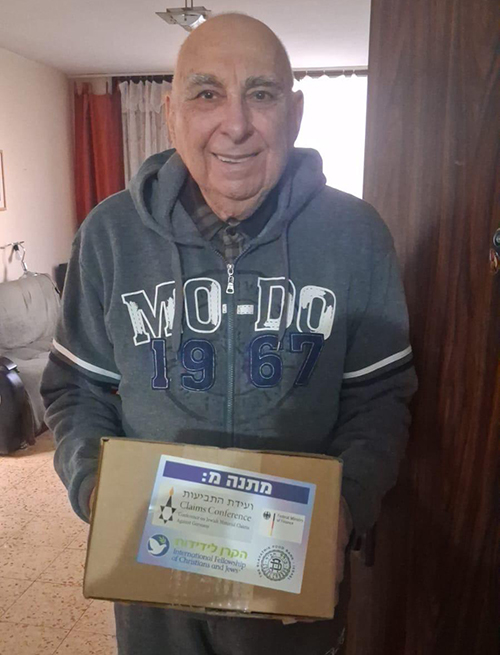
Across Israel, Claims Conference staff and our partner organizations continue their work under deeply challenging conditions while they, too, are living with uncertainty, disruption, and concern for their own families. Their dedication ensures that Holocaust survivors are not alone in this moment, that care continues uninterrupted and that dignity is preserved even in crisis.
We are profoundly grateful for their courage, their compassion and their steadfast commitment to those we serve.
In the face of so much hardship, we remain guided by a simple hope: that peace will come soon, and that the survivors in our care and all those affected may live in safety.