Learn more.
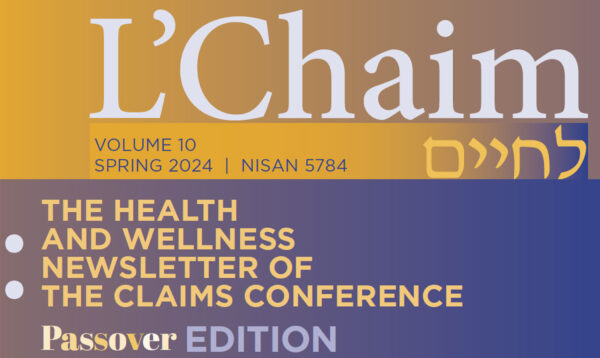
L’Chaim Newsletter
Read the latest issue of L’Chaim, the Claims Conference’s health and wellness newsletter for Holocaust survivors and their families.
The Claims Conference has launched the Survivor Speakers Bureau (SSB), a vast program of over 270 Holocaust survivors willing and able to tell their critical stories to students around the world.
Learn more.
Unprecedented Demographic Report On Holocaust Survivors Indicates Approximately 245,000 Jewish Survivors Alive Globally
Learn more.

On the 85th Anniversary of Kristallnacht, a Virtual Reality experience brought to you by the Claims Conference, the USC Shoah Foundation and MakeMePulse in partnership with Meta, UNESCO and the World Jewish Congress will be released in 2024.
Learn more.

The Claims Conference will continue to work to address the needs on the ground for Holocaust survivors after the horrific attacks that took place on October 7.
Learn more.

On Holocaust Remembrance Day, Survivors and Their Family Members Launch Year-Long Digital Campaign Sharing Stories of Survival That Made Their Families Possible.

Join us!
Working at the Claims Conference is more than just a job. It’s a chance to be part of history. Join us in our mission to provide a measure of justice to Holocaust survivors around the world.Learn more.

New Claims Conference Information Portal for Holocaust Survivors

Register here to create a personal account with the Claims Conference. Once registered you will be able to check on the status of applications, see previous payments, complete proof of life and receive personalized information.

Request a printed life certificate instead of using Paneem

If you received a request to submit proof of life using Paneem and cannot complete the process: A paper Proof of Life form is available here instead of using Paneem.

Holocaust Survivors Will Continue to Receive Additional One-Time Payments from the German Government Until 2027 As a Result of Claims Conference Negotiations

Hardship Fund Supplemental Payment
The Hardship Fund Supplemental Payment is open to certain Jewish Nazi Victims who have previously been approved for a Hardship Fund payment. Learn More

Paneem Digital Certification
Paneem is designed to make the process of identity verification easier and faster for all of our claimants. Please only use PANEEM if you received a letter or email requesting that you verify your identity through PANEEM.
Paneem Resources
Publications
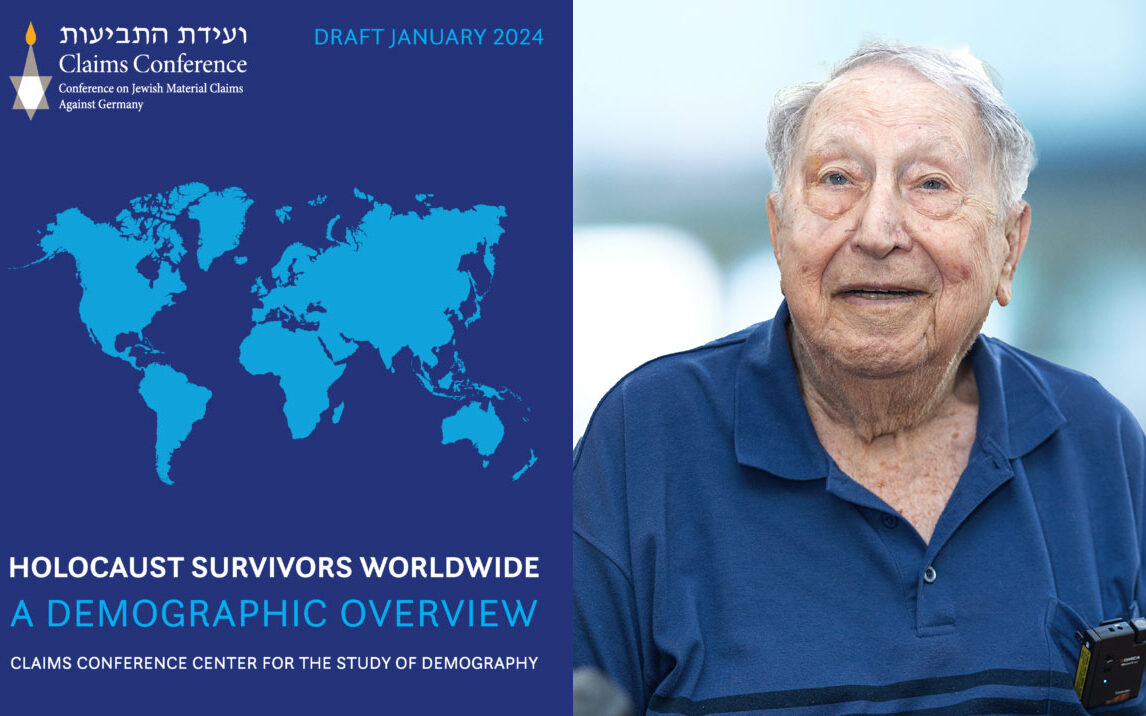
Holocaust Survivors Worldwide:
A Demographic Overview
The Demographic Study Identifies Jewish Holocaust Survivors In More Than 90 Countries; 49 Percent Reside In Israel, 18 Percent Reside In North America.
70th Anniversary Publication
In honor of the Claims Conference’s 70th Anniversary, we have prepared a booklet reflecting our work on behalf of survivors over the years.
L’Chaim
Read the latest issue of L’Chaim, the Claims Conference’s health and wellness newsletter for Holocaust survivors and their families.
UKRAINE UPDATE

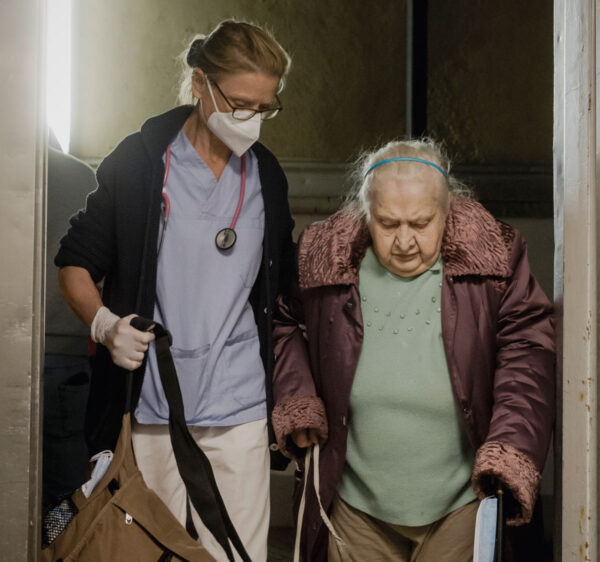
Claims Conference Responds with Urgent Care for Vulnerable Holocaust Survivors in Ukraine

New Study Reveals Nearly One Quarter of Dutch Millennials and GenZ Believe the Holocaust Was a Myth or Exaggerated
Only half of respondents are in favor of recent efforts by Dutch public figures to acknowledge and apologize for the Netherlands’ failure to protect the Jews during the Holocaust.
The Claims Conference has conducted seven surveys across six countries examining Holocaust knowledge and awareness worldwide
Our History
Founded in 1951 by representatives of 23 major international Jewish organizations, the Claims Conference negotiates for and disburses funds to individuals and organizations and seeks the return of Jewish property stolen during the Holocaust.